EFI stub: WARNING: Failed to measure data for event 1: 0x800000000000000b

The warning “EFI stub: WARNING: Failed to measure data for event 1: 0x800000000000000b” during Linux Mint boot is a Secure Boot / kernel‑measurement issue that has been appearing across Mint, Ubuntu, Kubuntu, and SuSE systems since 2023. The good news: your system is not damaged, and the boot continues normally. The warning indicates that the EFI stub attempted to measure boot data for TPM/Secure Boot logging and failed.

The most common and confirmed cause is having too many installed kernels.
Multiple independent reports show the warning disappears immediately after removing old kernels.

Then remove old ones using Update Manager → View → Linux kernels.

How to disable the Jetpack AI features

To fully and permanently disable the Jetpack AI features, you can add the following code snippet to your site using a plugin like Code Snippets:

add_filter( 'jetpack_ai_enabled', '__return_false' );

Once that’s in place, Jetpack AI will be completely disabled across your site.

Linux Mint Update Failed

Failed to fetch http://security.ubuntu.com/ubuntu/pool/main/c/cifs-utils/cifs-utils_7.0-2ubuntu0.3_amd64.deb 404 Not Found [IP: 2606:4700:10::6814:1cf6 80]

How to fix

Update Your Repository List

Run the below command to clean cache and update the list of available packages:

sudo apt clean -y
sudo apt update -y

Then use the Update Manager, reresh it, and try installing again.

This fixed it for me.

How to disable Chrome’s AI model and reclaim your storage

I wouldn’t advise removing the AI model from your computer if you use AI features in Chrome, since on-device models are better for your privacy. However, if you don’t intend to use any AI features within Chrome, you can consider removing the AI model.

To permanently remove the file and stop Chrome from hoarding your storage, you must first tell the browser to stop fetching the model, and then delete the files.

Step 1: Disable the Chrome Flags

  1. Open Google Chrome, type chrome://flags into your URL address bar, and press the Enter key on your keyboard.
  2. In the search bar at the top, search for “optimization-guide-on-device-model.”
  3. When the #optimization-guide-on-device-model flag appears, click the dropdown menu on the right and select “Disabled.”
  4. Search and disable “#prompt-api-for-gemini-nano” too.
  5. Click the Relaunch button that appears at the bottom of the screen to restart Chrome.

This stops Chrome from using the feature, preventing forced auto-downloads when you delete the files.

Step 2: Delete the Folder

Now that Chrome is blocked from retrieving the file, you can safely delete the bloated folder. Make sure Chrome is fully closed before doing this.

  • On Windows:
    • Press Win + R.
    • Paste %LOCALAPPDATA%\Google\Chrome\User Data\ and hit the Enter key on your keyboard.
    • Look through the “Default” folder (or your specific user profile folder) for the “OptGuideOnDeviceModel” folder.
    • Delete it.
  • On macOS:
    • Open Finder.
    • Press Cmd + Shift + G.
    • Paste ~/Library/Application Support/Google/Chrome/ and hit the Enter key on your keyboard.
    • Search for the “OptGuideOnDeviceModel” folder and move it to the trash.
    • Empty your trash bin.

There’s a chance a future Chrome update will reset these flags and redownload the AI model. There are registry changes you can make to prevent this from happening, but that is outside the scope for most users. The easier, non-nuclear option would be to repeat these steps again.

Source: https://www.androidauthority.com/google-chrome-weights-bin-ai-model-download-explained-3664043/

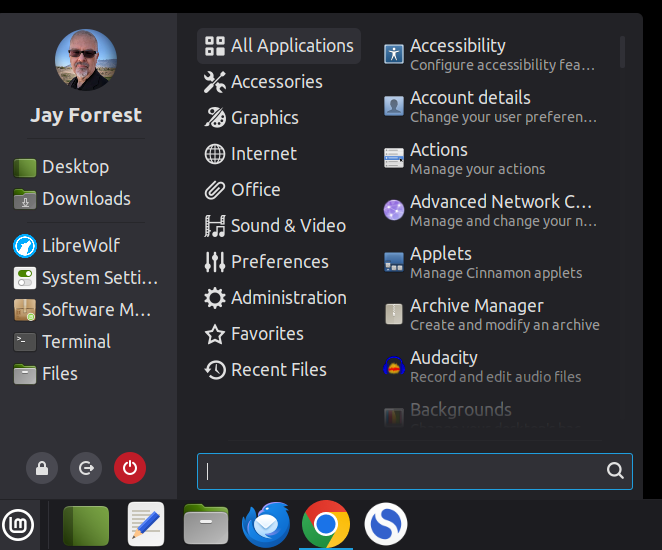
Linux Mint 22.3 Menu Sucks

In one of the first disappointments with Linux Mint, their new menu sucks. It doesn’t look good. It is functional, but ugly.

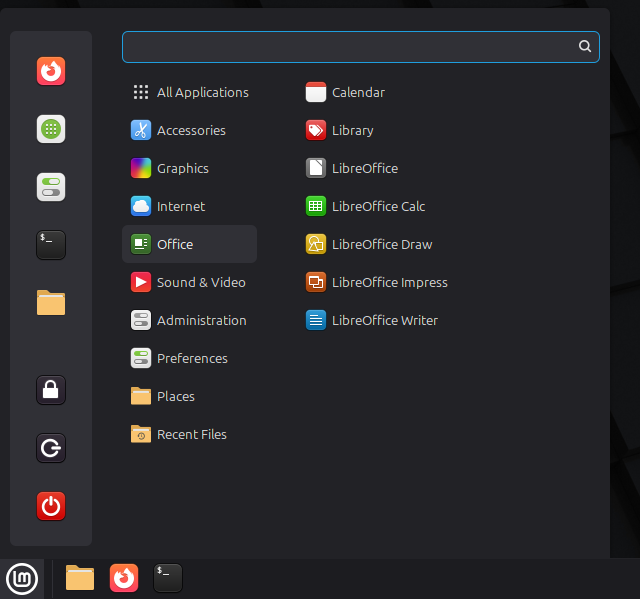
The Old Menu

The original was much better!

Three Free WordPress Security Plugins

WordPress sites are under attack all the time. I have found three free plugins that help me protect my WordPress website. I add a fourth bonus plugin.

The first is “Wordfence Security.” It is an does basic monitoring, blocking, and anti-virus, Firewall and Malware Scan.
https://www.wordfence.com/

Second is “Hide My WP Ghost Lite.” This hides WP CMS, 7G/8G Firewall, Brute Force Protection, 2FA, GEO Security, Temporary Logins, Alerts & more.
https://hidemywpghost.com/.

Third is “IP2Location Country Blocker.” Block visitors from accessing your website or admin area by their country.
https://www.ip2location.com/

Fourth, is “JetPack.” In setting under the Security tab I enable Firewall and Brute force protection. I use the plugin for other reasons, so it is not essential for security.
https://jetpack.com/

Installing Brave on Linux

Google search has gotten worse over the years. You are not imagining it, it’s true. So I have decided to switch to Brave Search.

But, since I am switching, I thought I would give the Brave Browser a spin. And I thought, maybe others would be interested as well. So here is how to install it on Linux Mint. Directions for other distros is provided on their page.

Debian, Ubuntu, Mint 

Copy and paste these lines in the terminal, one by one, hitting enter each time. Enter your password, do the next line. After you are done, you will find it in your Menu under Internet.

sudo apt install curl

sudo curl -fsSLo /usr/share/keyrings/brave-browser-archive-keyring.gpg https://brave-browser-apt-release.s3.brave.com/brave-browser-archive-keyring.gpg

echo "deb [signed-by=/usr/share/keyrings/brave-browser-archive-keyring.gpg] https://brave-browser-apt-release.s3.brave.com/ stable main"|sudo tee /etc/apt/sources.list.d/brave-browser-release.list

sudo apt update

sudo apt install brave-browser

To add Brave Search to Google Chrome:

https://search.brave.com/default

Linux Mint 22 Cinnamon Edition Review

I have upgraded to Linux Mint 22 code named “Wilma”. I am using the Cinnamon Edition. It is a long term support release which will be supported until 2029. 

My first impression is that there is not much change, which is good.

The release note mention better language support, support for new technology, support for popular features, and now the Software Manager is faster and better looking.

Linux Mint 22 comes with a preinstalled Web App called Matrix. This is because they have discontinued using Hexchat. The Welcome screen has a link under Help.

My only issue is the Ubuntu font has been updated. It is thinner and narrower. I did a previous post on how to go back to the classic Ubuntu font.

Don’t forget to install the Microsoft fonts on your system. These are Times New Roman, Arial Black, Arial, Comic Sans MS, Courier New, Impact, and Verdana. In terminal, just copy and paste the following:

sudo apt install ttf-mscorefonts-installer

Since I use Linux Mint on my main machine, I appreciate the lack of drastic changes. Linux Mint is solid, reliable, and its desktop environment is beautiful and comfortable. Everything is where you expect it to be, and customization is fairly easy. Another 5 star product.

To upgrade to Linux Mint 22
https://linuxmint-user-guide.readthedocs.io/en/latest/upgrade-to-mint-22.html

New Features
https://www.linuxmint.com/rel_wilma_whatsnew.php

Release notes
https://www.linuxmint.com/rel_wilma.php

Return to Ubuntu Classic Font in Linux Mint 22

In Linux Mint 22 the Ubuntu font was updated to a thinner version. I don’t like it. So here is how to return to the wider and thicker classic Ubuntu font.

Install the fonts-Ubuntu-classic package.

You will need to reboot, all your lettering will be messed up. Open your menu after you install the font and you will understand.

Now you have to lock the font in Synaptic Package Manager.

Search for “font-ubuntu-classic”.
Highlight it
Click on Package from the above menu, and select “lock version”.
It will turn red once it is locked.

You are go to go.

Visual Link: https://www.youtube.com/watch?v=_qZI6i21jB4&t=1086s

Ubuntu Cinnamon – Don’t

Today, I installed Ubuntu Cinnamon 24.04 LTS on my laptop.

I originally started on Linux back in 2009. My first distro was Ubuntu. I have been using Linux ever since. But Ubuntu has made a lot of mistakes along the way. They ignored users and did their own thing. That is why I switched to Linux Mint.

Linux Mint uses the Ubuntu software and repackages it for their own distro. Their Cinnamon desktop is simply the best. So when I hear that Ubuntu has added an officially supported Cinnamon version of Ubuntu, I had to try it out.

I am greatly disappointed. The system runs slower and has a hundred paper cuts. I am not happy about being forced to use Snap package manager (which is not open source).

I use Chrome, so I did my usual. I went to Google, downloaded the Deb package, and installed it on my system. The program will not boot. And so I deleted Ubuntu Cinnamon 24.04 LTS from my system and reinstalled Linux Mint 21.3.

The installation was faster and more intuitive. The desktop and software just runs, and looks awesome. Linux Mint is still number 1 in my book.